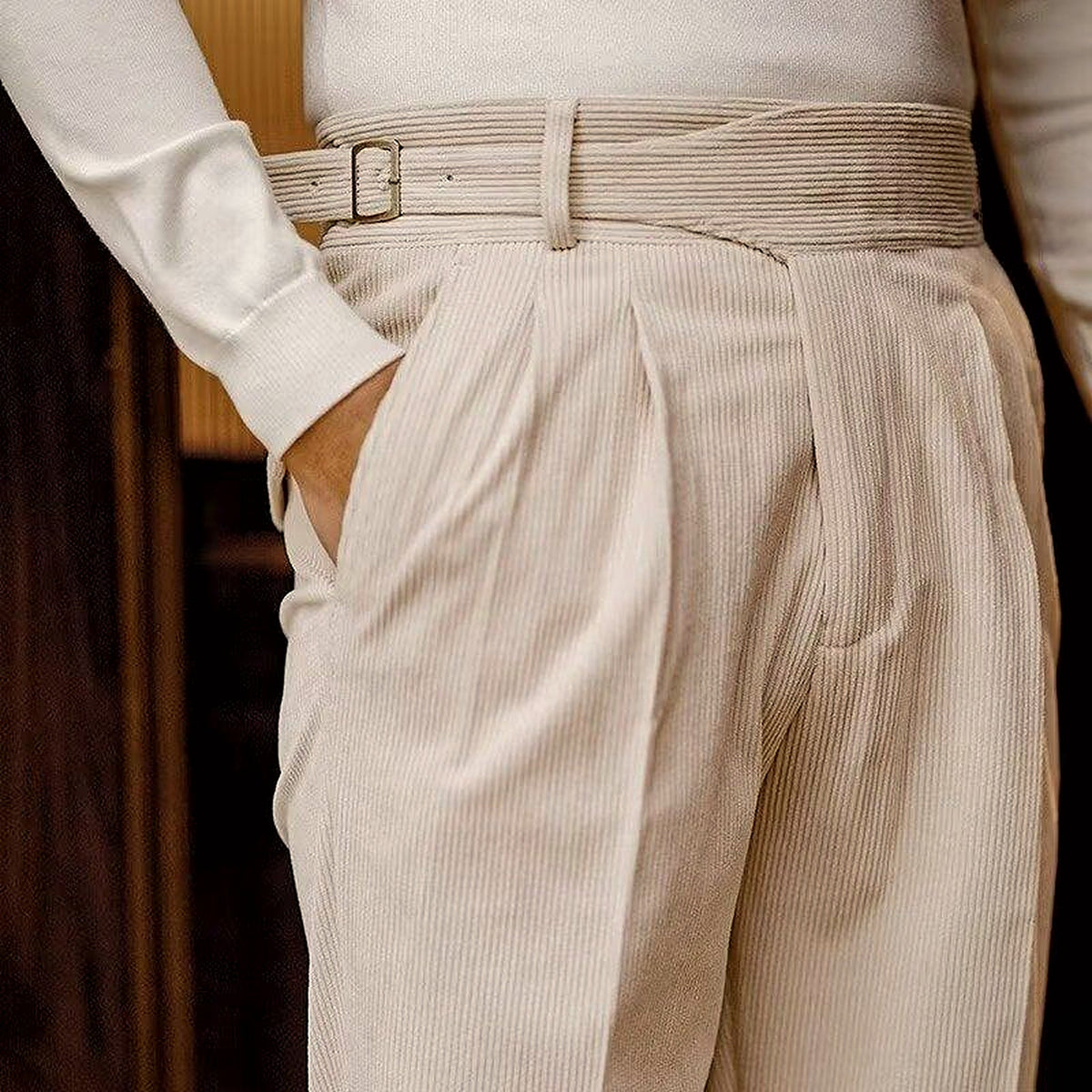

The Bible does not hand Christians a wardrobe list. It does something better: it uses clothing from the first chapters of Genesis to the last chapters of Revelation to show who God is, who we are, and what he does for us. Garments cover shame, mark status, express grief, signal protection and picture salvation itself. This guide walks through the main passages in context, clears up the hard ones (mixed fabrics, Deuteronomy 22:5, modesty) and ends with practical principles for choosing what you wear.
TL;DR
- The first clothing in Scripture is God’s own gift: he made garments for Adam and Eve in Genesis 3:21, an act of provision and mercy.
- Biblical writers use clothing as a symbol of status, mourning, protection and, above all, a changed life: “put on the new self” (Ephesians 4:24).
- Jesus tells us not to be anxious about what we wear (Matthew 6:28-30) and warns against dressing for social superiority.
- Modesty passages in 1 Timothy 2 and 1 Peter 3 are about humility and self-control, not a dress code.
- The practical test: does what you wear reflect a heart that belongs to Christ, and does it serve the people around you?
Table of Contents
- The first garments: God clothes Adam and Eve
- What clothing symbolizes in Scripture
- Garments for worship: the priestly clothing of Exodus 28
- Mixed fabrics and Deuteronomy 22:5
- Modesty: what 1 Timothy 2 and 1 Peter 3 actually address
- Do not be anxious about clothes
- Putting on the new self: the clothing metaphor at the center
- How to choose what to wear: five biblical questions
- Faith you can wear: where to start with MODE OF GOD
- FAQ
- Sources
The first garments: God clothes Adam and Eve
The story of clothing in the Bible starts with a gift. After the fall, Genesis 3:21 says the Lord God made garments of skin for Adam and Eve and clothed them. Humans had tried to cover themselves with fig leaves. God replaced that effort with something sturdier.
That detail matters for how we read everything that follows. Clothing begins as an act of divine care, not vanity. A thoughtful reading sees in it a pattern the rest of Scripture repeats: we cannot cover ourselves, and God provides the covering. Reference works on biblical themes list this verse first among the places where God is shown providing garments, alongside the priestly vestments of Exodus 28 and Jesus’ teaching in Matthew 6.
What clothing symbolizes in Scripture
In the ancient world, what a person wore told you a lot. A robe could announce rank, a plain cloth could announce poverty, and torn garments could announce a broken heart. Biblical authors lean on all of this.
Status and wealth
Rich clothing was a sign of wealth or status, and unusual clothing, like John the Baptist’s, stood out as a statement. Scholars at BYU’s Religious Studies Center note that clothing in the New Testament world marked worldly and spiritual status, and that Jesus’ teaching about the body and raiment acknowledges our habit of judging by appearance. The same source says Jesus criticized scribes who wore long robes as part of their claim to social superiority.
The lesson is not that nice clothes are sinful. Proverbs 31:22 describes a woman whose clothing is fine linen and purple, and the text treats that as part of a picture of a capable, honored life. The problem Jesus names is wearing clothes to elevate yourself over others.

Grief, distress and protection
Garments also carry emotion. Tearing clothes expresses mourning or distress, as when Jacob responds to the loss of Joseph in Genesis 37:29. Spreading a garment over someone, as Ruth asks Boaz in Ruth 3:9, represents protection or possession. When you read these scenes, you are reading a visual language the original audience understood instantly.
Creation and identity
Biblical poets even borrow clothing imagery for creation. The RSC study points to God covering the earth with light and water, and to Job speaking of being clothed in skin and flesh. Clothing is a way the Bible talks about what surrounds, defines and reveals us.
Garments for worship: the priestly clothing of Exodus 28
Exodus 28 gives detailed instructions for the garments of Aaron and his sons, made for glory and for beauty. These were not casual clothes. They set the priests apart for service and pointed to the holiness of the one they served. Dress could be a form of worship when it was done for God’s purposes and not for self-display.
The New Testament picks up the thread by calling believers a royal priesthood (1 Peter 2:9). We do not wear vestments, but the idea carries over: how we present ourselves can honor the one we belong to.
Mixed fabrics and Deuteronomy 22:5
Two verses trip up many readers, so let’s take them directly.
Why was mixing wool and linen forbidden?
Leviticus 19:19 and Deuteronomy 22:11 prohibit garments woven from two kinds of material. The Hebrew term is shaatnez, referring to wool and linen threads combined. According to the RSC publication, archaeological finds at Masada and Qumran show textiles of a single fiber type, consistent with observant Jewish communities keeping the rule. The same study observes that early Christians, as the movement spread beyond its Jewish roots, often wore garments of mixed wool and linen.

In other words, this was part of the Mosaic law given to Israel as a sign of distinctness, and the church did not carry it forward as a clothing rule. Wearing a cotton-polyester hoodie is not a spiritual problem. The New Testament is clear that Gentile believers were not placed under that ceremonial code (Acts 15).
What does Deuteronomy 22:5 say?
The verse says a woman shall not wear a man’s garment, nor a man a woman’s cloak. The RSC study explains that its aim was distinguishing gender through clothing, and adds that by New Testament times men’s and women’s garments were often similar in construction, differing mainly in color, length and head covering. So when we apply the verse, we should read it in its cultural setting and ask what it meant then, rather than turning it into a rule about cuts and silhouettes in modern stores. Christians land in different places on how to apply it, and it is wise to hold that conversation with your pastor and your church family with grace.
Modesty: what 1 Timothy 2 and 1 Peter 3 actually address
The best-known New Testament passages on dress are 1 Timothy 2:9-10 and 1 Peter 3:3-4. Paul asks women to adorn themselves in respectable apparel, with modesty and self-control, and Peter points to the hidden person of the heart as the real beauty.
CBE International argues these warnings are aimed at excess and pride, not at how much of the body is covered. Writing for Desiring God, Mary Kassian describes the Greek idea behind modesty (aidos) as inward restraint and appropriate respect, set against brashness and audacity. She argues modesty is an outward expression of a heart that has already put on Christ. The two authors come from different corners of the church, and they agree on the center: modesty starts in the heart.
A few practical takeaways follow:
- Ask whether your clothes draw attention to your wealth, your body or your status, or whether they let you serve and be present.
- Choose clothing you can move, work and worship in without self-consciousness.
- Keep the standard for yourself, and extend grace to others. Scripture gives no list for policing people’s wardrobes.
Do not be anxious about clothes
In Matthew 6:28-30 Jesus points at wildflowers and asks why we worry about clothing. If God dresses the grass of the field, he will care for you. The Dictionary of Bible Themes summarizes the point: believers should not be unduly anxious about what they wear.
This is the counterweight to any fashion obsession. It also does not say clothing is unimportant. In Matthew 25:35-36 Jesus lists clothing the naked among the acts of mercy he counts as done to him, and the RSC page reads this as highlighting clothing as a basic human necessity and the duty to provide for people in need. Practically, that is a good reason to give well-made clothes to a shelter or a mission outreach, and to buy things built to last.
Putting on the new self: the clothing metaphor at the center
The richest use of clothing in the Bible is spiritual. A few key passages:
- Isaiah 61:10: “He has clothed me with garments of salvation.” The prophet celebrates being dressed by God in rescue and righteousness.
- Galatians 3:27: those baptized into Christ have clothed themselves with Christ.
- Ephesians 4:24: put on the new self, created to be like God in righteousness and holiness. Crossway’s biblical theology of clothing frames this as becoming who we already are in Christ.
- Colossians 3:12: put on compassion, kindness, humility, gentleness and patience.
This is the heart of the matter. Physical clothes are never the main point. They are a picture of an identity God gives. The outfit that matters most is the one you cannot buy, and the question for the rest of your wardrobe is whether it tells the truth about that one.
Our perspective: wear it without apology
We started MODE OF GOD because of Isaiah 61:10. “Garments of Salvation” is not a slogan we found in a marketing meeting; it is what Scripture says God does for those who trust him. When we design a hoodie or a tee, we are thinking about that picture: a person clothed by grace, living it out on an ordinary Tuesday and not only on Sunday.
That is also where our “No Grey Area” message comes from. We believe faith is meant to be lived plainly, in the open, with humility and conviction together. The Bible never says clothing is the source of holiness, and we would never claim a garment saves anyone. But clothing can be a conversation starter, and a quiet, steady reminder to the wearer. A verse on a chest or a sleeve can open the door to someone asking, “What does that mean?”
We design with the biblical principles in this article in mind: nothing built to flaunt status, pieces made to be comfortable and worn often, and messages that point away from us and toward Christ. We also care about caring for creation, which is why we pay attention to materials and sustainable packaging.
vainway
How to choose what to wear: five biblical questions
Scripture gives principles, not a catalog. Here is a simple way to apply them.
- Is it honest? Does it reflect who you are in Christ, rather than a persona you are trying to project? (Ephesians 4:24)
- Is it humble? Does it avoid showing off wealth or status? (1 Timothy 2:9-10; Mark 12:38)
- Is it peaceful? Are you wearing it with freedom, not anxiety about the right label? (Matthew 6:28-30)
- Is it considerate? Will it serve the setting, whether church, work, a mission trip or a family gathering? Our guide to mission trip clothing shows how to think this through for travel and service.
- Is it generous? Buy fewer, better things, and share what you do not need. (Matthew 25:35-36)
If you want to wear a message, religious graphic tees are the simplest place to begin. Choose a design you can explain in one sentence, because the point is conversation, not decoration. And if stewardship matters to you, look at what to consider in eco-friendly clothing materials.
Faith you can wear: where to start with MODE OF GOD
If this study leaves you wanting to wear your convictions, we make faith-based hoodies, sweaters, tees and matching sets for men and women. The Through Christ Hoodie carries Philippians 4:13. The Jesus Saves Gangsters Too washed tee opens conversations fast. For cold months, the fleece-lined hoodie and pants set is a matching set made for everyday wear. You can also browse every hoodie, tee and set in the collection, and read the story of the GOD seal behind our branding.

Every piece is made to say one thing clearly: you belong to Christ, in every season and every setting.
FAQ
What does the Bible say about the clothes we wear?
The Bible gives principles rather than a dress code. It calls for modesty and self-control (1 Timothy 2:9-10), warns against dressing to show status, and tells us not to be anxious about clothing (Matthew 6:28-30). Above all, it asks us to put on the new self in Christ (Ephesians 4:24).
Why does the Bible forbid mixed fabrics?
Leviticus 19:19 and Deuteronomy 22:11 forbade combining wool and linen in Israel’s law, and archaeology suggests observant Jewish communities kept it. Early Christians, according to the RSC study, often wore mixed wool and linen, so the church has not treated it as a rule for believers today.
What does Deuteronomy 22:5 mean for clothing today?
The verse distinguished men’s and women’s garments in ancient Israel. Scholars note that in New Testament times the two were often similar in construction. Most Christians apply it by reading it in context, and approaches vary, so it is worth talking through with your pastor.
What does Ephesians 4:32 say?
Ephesians 4:32 asks us to be kind and compassionate to one another, forgiving as God in Christ forgave us. It sits right after the call to put on the new self in 4:24, so it shows what that new clothing looks like in daily life.
Is it wrong to care about fashion as a Christian?
No. Scripture describes beautiful clothing without condemnation, as in Proverbs 31:22. The concern is pride, excess and anxiety. Dress well, dress humbly and keep your heart on the one who clothes you.
Sources
- 5145 clothing, Dictionary of Bible Themes, Bible Gateway
- Clothing and Textiles in the New Testament, Religious Studies Center (overview page)
- Clothing and Textiles in the New Testament, Religious Studies Center (PDF)
- 5 Things the Bible Does (and Doesn’t) Say About Modesty, CBE International
- Does God Care What I Wear?, Desiring God
- A Biblical Theology of Clothing, Crossway